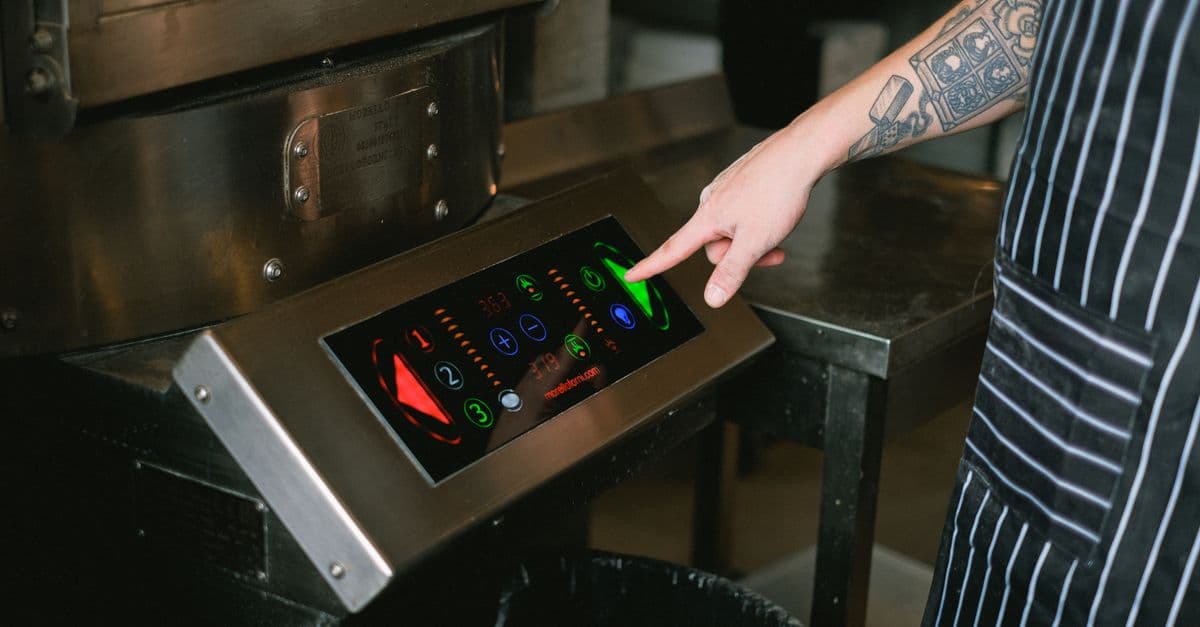
Going digital does not mean replacing everything with screens. It means using technology to remove friction, save time and serve your customers better. In this guide, we untangle what digital transformation really involves for a small or mid-sized business, and above all where to begin, without jargon and without launching an endless project.
Many small-business owners hear about digital transformation as a heavy undertaking reserved for large corporations with a dedicated IT department. The reality is more reassuring: it is a series of small, concrete projects, each delivering a measurable benefit. The goal is not to have "the most tools," but to eliminate the tasks that cost you several hours every week.
What digital transformation is not
It is not about buying the latest trendy software, nor digitalizing for the sake of it. It is about rethinking your processes around a clear goal: less data entry, fewer errors, more visibility. A sophisticated tool used poorly often costs more than a well-designed shared spreadsheet.
It is not a "do it once and forget it" project either. It is an ongoing process: you improve one workflow, measure it, adjust, then move on to the next. A business that digitalizes wisely progresses in small waves, not through a sweeping revolution that stalls operations for months.
The "everything, all at once" trap
Trying to modernize the entire company in a single project is the surest way to slow everything down. You spread yourself thin, exhaust your teams and never truly measure what worked.
The 4 priority areas
Most small businesses find their biggest time savings in four areas. You do not have to tackle them in this order: start with the one that hurts most in your daily work.
1. Customer relationships
Centralize conversations, automate follow-ups, respond faster. A CRM and a well-designed form change everything. In practice, a tradesperson who once received requests by phone, email and Instagram can bring it all into a single tool: no request slips through the cracks, and every prospect gets a quick reply. To go further, you can connect your contact form to your CRM automatically so that every new contact creates a record with zero re-entry.
2. Management and invoicing
Automated quotes, invoices and payment reminders cut delays and oversights. A consulting firm that sent invoices by hand at month-end can switch to automatic generation as soon as a service is validated, with a scheduled reminder in case of late payment. The owner reclaims time and often gets paid faster. If you are starting from scratch, our complete method for automating your invoicing breaks down the steps one by one.
3. Communication and visibility
A fast, well-ranked website works for you around the clock. It is often a customer's first point of contact: if it is slow, unreadable on mobile or nowhere to be found on Google, you lose business without even knowing it. Before any visibility project, rely on a checklist for building a high-performance website and on the SEO fundamentals that really matter for a local business.
4. Data
Bring together your scattered data to steer the business with clear dashboards. When revenue lives in one piece of software, leads in a spreadsheet and hours worked in a notebook, no one has the full picture. Consolidating that information, even simply, lets you decide on facts rather than gut feel.
Start with the pain
The best starting point is not the most "strategic" one, it is the most painful in daily work. Fix what frustrates your teams first: buy-in comes naturally once they see the time they save.
A step-by-step method to get started
No need to write a fifty-page specification. A small business moves faster with a simple, repeatable method applied one project at a time.
- 1Observe: for one week, list the tasks that keep recurring, the ones that frustrate people and the ones that cause errors.
- 2Prioritize: pick ONE process, the one that combines high pain and a quick win.
- 3Define the need: describe what the process must deliver, before looking at any software.
- 4Choose the tool: compare two or three solutions against concrete criteria (see below).
- 5Deploy small: test on a real case, one customer, one team, before rolling it out.
- 6Train and measure: support your teams and check the time actually saved before moving to the next project.
This gradual approach echoes the logic described in our article where to start to automate your business: you are not chasing perfection, you are looking for the next small, profitable step. Small businesses will also find immediately applicable ideas in automating the administrative tasks of a small business.
A successful digital transformation is not measured by the number of tools installed, but by the number of tedious tasks that have disappeared.
How to choose your tools without going wrong
The most common mistake is choosing the tool before defining the need. A powerful but complex piece of software often ends up abandoned, whereas a modest solution adopted by everyone delivers lasting results. Here are the criteria that truly matter for a small business.
| Criterion | Why it matters | Question to ask yourself |
|---|---|---|
| Ease of use | A tool that is too complex will not be adopted | Can my team use it without heavy training? |
| Interoperability | Your tools must talk to each other to avoid re-entry | Does it connect to my existing software? |
| True cost | The advertised price often hides add-ons and tiers | How much will it cost once my business has grown? |
| Support and longevity | A tool abandoned by its vendor becomes a risk | Is the vendor reliable and well supported? |
| Data security | Your customer data is your responsibility | Where is the data hosted and is it compliant? |
Keep in mind that a digital tool should remain a means, never an end. Before investing, estimate the expected gain: our guide to calculating the ROI of an automation project helps you put a number on the time reclaimed against the cost of the solution.
Test before you commit
Most good tools offer a free trial. Use it to reproduce a real case from your business rather than the vendor's ideal demo. You will quickly see where it stumbles.
The classic mistakes to avoid
- 1Trying to do everything at once instead of moving forward one project at a time.
- 2Choosing the tool before defining the need.
- 3Neglecting training and team buy-in.
- 4Forgetting to measure results and celebrate the first wins.
- 5Automating a shaky process: you then get a faster error, not an improvement.
This last point is crucial. Digitalizing a poorly designed process only speeds up the chaos. You must simplify first, then equip. Taking the time to observe before automating avoids many costly reversals.
Early wins build confidence
A first successful project, however modest, unlocks the rest. Teams see the concrete benefit and become drivers of change instead of enduring it. That is the best fuel for a lasting transformation.
Make your quotes and invoices reliable
Before automating your invoicing, make sure your figures add up. Our VAT calculator helps you go from net to gross in an instant, error-free.
Frequently asked questions
Where should a small business start its digital transformation?
Start with the most painful process in your daily work, not the most strategic one. Pick a single repetitive task that costs you time every week, fix it, measure the gain, then move on to the next. This small-steps approach reassures teams and avoids disrupting operations.
How long does it take to digitalize a small business?
There is no single timeframe, because digital transformation is ongoing. A first targeted project can be up and running in a few weeks. What matters is making steady progress, one process after another, rather than aiming for a big project that drags on for months.
Why do so many digitalization projects fail?
Most often because the tool was chosen before the need was defined, or because teams were not trained and involved. Automating a shaky process only speeds up the chaos. Simplify first, equip second, and always measure the results.
Which tool should I choose to digitalize my business?
There is no universal tool: the right choice depends on your specific need. Evaluate each solution on its ease of use, its ability to connect to your existing software, its true cost and data security. A simple, adopted tool beats a powerful but neglected one.
Does digital transformation really apply to very small businesses?
Yes, and often even more than to large organizations. A very small business immediately feels the time saved on invoicing, follow-ups or appointment booking. No big budget is needed: a few well-chosen automations are enough to lighten the owner's daily load.
In summary
Digital transformation for a small business is neither a luxury nor a project reserved for large corporations: it is a series of concrete decisions that remove everyday friction. Start with the pain, move forward one project at a time, define the need before the tool, train your teams and measure every gain. By taking small, profitable steps, you transform your business without destabilizing it. If you want to scope, prioritize and roll out your project at your own pace, let's talk for a few minutes: TC Automation helps you make the right choices, from the first project through to data-driven decision-making.